St. Jerome's University, Waterloo · November 13–16, 2026
Evidence Jam 2026
Causapalooza!
A weekend hackathon using AI to turn ecological literature into structured causal knowledge — one challenge, three lanes, one shared scoreboard.
Applications are now closed
One CAMO edge, annotated
Ecology needs answers faster than a literature review can give them
What's the best way to manage invasive buckthorn? How does species reintroduction change an ecosystem? What actually improves restoration resilience? Answering these properly can take years of literature synthesis. We're going to try it in a weekend.
Six teams get real ecological data, fully-stocked GitHub repos, and roving mentors to break logjams. We have the Nibi supercomputer and GPU desktops on site for running local models. And food — good food, all weekend.
Who it's for
- Software developers & ML engineers
- Restoration & conservation ecologists
- UX/UI designers
- Data scientists & knowledge engineers
- Philosophers of science
Team size
Six teams of 2–4 people. Participants applied as groups or solo, with solo applicants matched to teams. Interdisciplinary teams are strongly encouraged and prioritized in selection.
One challenge, three lanes
Lane 1
Turn papers into a causal graph
Given a corpus of restoration ecology articles, extract their causal claims into CAMO. How much of the schema's richness you capture — and how you get there — is your call.
- You get
- The corpus, the schema, a few hand-annotated examples.
- Rigor is measured by
- Schema-valid output, checked against papers you haven't seen.
Lane 2
Reason over the claims
Build something that lets a restoration practitioner ask a question and get a trustworthy, evidence-grounded answer — without inventing anything the evidence doesn't say.
- You get
- A curated set of CAMO-structured causal claims, the schema.
- Rigor is measured by
- Accuracy on a held-out question set, honest confidence, graceful "I don't know."
Lane 3
Help a practitioner decide
Build an interface that helps someone planning a restoration make a call from this evidence: will it work, how sure are we, can it be undone, does it fit my site.
- You get
- CAMO-structured evidence, existing wireframes — use them or don't.
- Rigor is measured by
- A real practitioner walking through your interface with a live decision.
Every lane, one rubric
Whichever lane you pick, your project is scored on the same five criteria. The strongest overall projects win prizes.
What is the Causal Mosaic Schema?
The Causal Mosaic Schema (CAMO) is a data schema written in LinkML — a fill-in-the-blanks form for documenting causal claims. If a researcher says "X causes Y," CAMO gives you a way to document exactly how, and how confident the researcher is that it's causal rather than merely correlational.
It was developed together with philosophers of causality, including Dr. Phyllis Illari, who wrote the book on causality. Every team gets a half-page primer and a worked example as part of their starter repo.
Lane 1 extracts causal claims into CAMO. Lane 2 reasons over CAMO-structured claims. Lane 3 helps practitioners act on them. Same schema throughout — which is what makes it worth collaborating across lanes.
Every repo includes
- The CAMO schema
- One worked example
- A half-page primer
- Environment setup, ready to go
Awards and prizes
One grand prize by random draw, two on merit, and one voted by the room.
Dell Pro Max with GB10
FCM1253 · 20-core NVIDIA GB10 Grace CPU, Blackwell GPU, 128 GB LPDDR5X, 4 TB SSD. One name drawn at random from every participant — not just team leads or winning teams. Everyone who takes part has the same chance to win, regardless of how their project scores.
Gold Raccoon
One shared competition, one set of prizes. Every lane is scored on the same rubric, and the two strongest projects overall take home Dell hardware — not the strongest project in each category.
- 1st Dell Pro P24 USB-C Hub Monitor P2426HE · 23.8″ FHD, 120 Hz, USB-C hub
- 2nd Dell Pro Plus Earbuds EB525 · adaptive ANC, 33 h with case
Green Raccoon
Goes to the team combining a genuinely strong project with the smallest measured footprint — local compute and hosted model API calls both count. Only projects that clear the same quality bar as the main competition are eligible; being efficient alone isn't enough to win. We're seeking dedicated funding for this prize now — details to follow.
Most Valuable Possum
Goes to whoever most enriched the weekend — helping other teams, sharing their work generously, and unsticking someone else's logjam.
Schedule
The DRAGEN Lab is open 9 a.m.–6 p.m. Saturday and Sunday. Four Nibi supercomputer checkpoints and two cross-team check-ins keep momentum going across the weekend.
Friday, November 13
Saturday, November 14
Sunday, November 15
Monday, November 16
The space
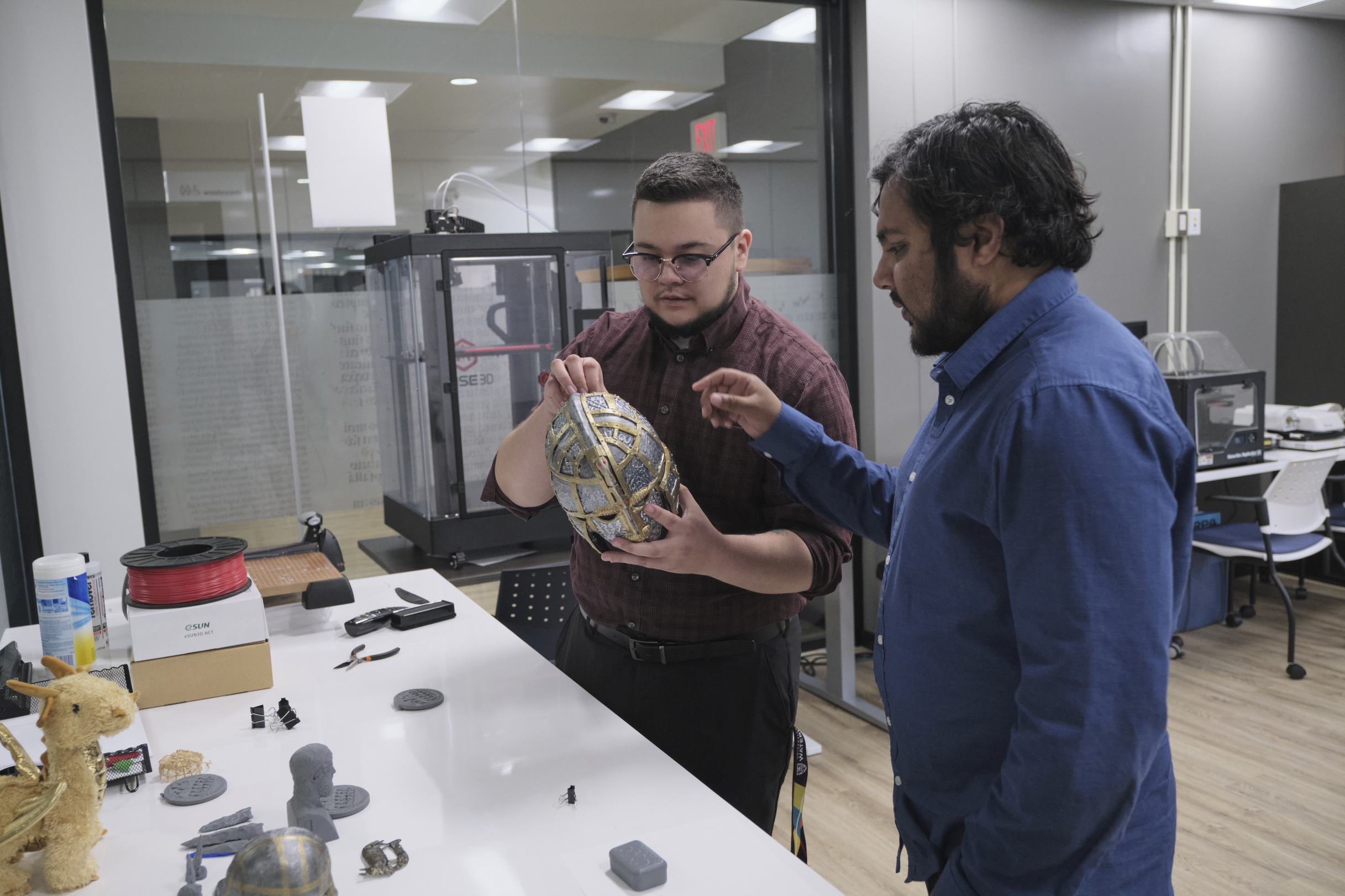
Evidence Jam takes place in the DRAGEN Lab at St. Jerome's University — 3,600 ft² of purpose-built collaborative research space inside the newly renovated library, with a Makerspace offering 3D scanning, 3D printing, and high-performance computing.
- Collaborative team work areas
- GPU workstations for local model inference
- Makerspace with HPC units & fabrication tools
- Strong campus WiFi throughout
Breakfast and lunch are provided Saturday and Sunday, coffee from 9 a.m. each morning. We're seeking funding for an evening social — if it happens, we'll announce it. Dietary requirements are accommodated.
290 Westmount Road North, Waterloo, ON — a short walk from campus, accessible via ION light rail. sju.ca · dragenlab.ca
Supported by




See you in November!
Applications are now closed
Thank you to everyone who applied to Evidence Jam 2026. Applications closed on Friday, October 9, 2026, and we're now reviewing submissions. Selected teams will be contacted and asked to complete a short Team Charter before the event.